Lugano Tribune, luganotribune.com
LUGANO
Fifty-two new doctors at USI: Cassis welcomes them with science, humanity and the health bill
At the Università della Svizzera italiana's medical graduation ceremony, the Federal Councillor, a doctor before he was a politician, spoke to the 52 graduates about curiosity, patients to understand, and health spending that has reached almost CHF 100 billion a year.
Translated from the Italian original. Read in Italian
Fifty-two new doctors have received their medical degrees at the Università della Svizzera italiana. Greeting them in Lugano on Saturday November 21, minutes before the graduates pronounced their medical oath, was Federal Councillor Ignazio Cassis, head of the Federal Department of Foreign Affairs, who in his address at the Faculty of Biomedical Sciences graduation spoke first of all as a colleague: a clinician first, then a cantonal doctor, a national councillor and now a member of the federal government.
Cassis had already come to Lugano three years ago for the first class of doctors trained by the university: then the graduates were 47 and he called them pioneers who had written a page of the canton's history. This time, he said, the occasion was not a first but something perhaps more important, a fine story that continues, at the end of six years of study.
E soprattutto, per festeggiare voi, 52 nuovi medici!
Ignazio Cassis, Federal Councillor and head of the FDFA, in his address at the USI medical graduation ceremony in Lugano, 21 November 2026 (text published by the FDFA; in the original Italian)
Three responsibilities: knowledge, the person, society
The address, delivered in Italian and German, turned on three responsibilities. The first is to knowledge: medicine is changing faster than ever, amid artificial intelligence, genetics, robotics and personalised therapies, and much of what was learned in six years will be outdated within ten. Hence the invitation to stay curious, to question what one thinks one knows, and to have the courage to admit not knowing: a good doctor is not someone who always has an answer, but someone who knows when to keep asking.
The second responsibility is to the person. A patient is more than a diagnosis, a laboratory value or an image on a screen: a person with their own history, worries and expectations. Artificial intelligence may help reach a diagnosis, one day perhaps surpassing doctors, but it will not take on the human responsibility: a patient needs someone who understands their illness and who understands them too, because fear, hope, pain and trust change far more slowly than technology.
Eight Gotthards a year
The third reflection was economic. Medicine is a science, an art and a human relationship, but today it is also one of the largest sectors of the Swiss economy: when Cassis began his career the country spent about CHF 36 billion a year on health; today the figure is almost CHF 100 billion. His comparison was the Gotthard base tunnel, 57 kilometres built in 17 years for about CHF 12 billion.
Ebbene, ogni anno la Svizzera spende per la sanità l'equivalente di otto gallerie del San Gottardo!
Ignazio Cassis, in his address at the USI medical graduation ceremony, 21 November 2026 (text published by the FDFA; in the original Italian)
Hence the appeal for measure: every examination prescribed and every treatment proposed has consequences for the patient and for the community, which pays through health insurance premiums, taxes and direct costs. The point is not to become accountants, Cassis said, but aware doctors: good medicine does not do everything that is technically possible, it does what is necessary, useful and proportionate, and sometimes the hardest medical decision is to forgo an examination or treatment that brings no real benefit.
He closed with three wishes for his new colleagues: curiosity, to keep learning; humanity, never to forget the person in front of them; and a sense of responsibility towards patients and society. And a calm word about mistakes, which belong to the lives of doctors as of politicians: what matters is to recognise them, learn from them and not repeat them.
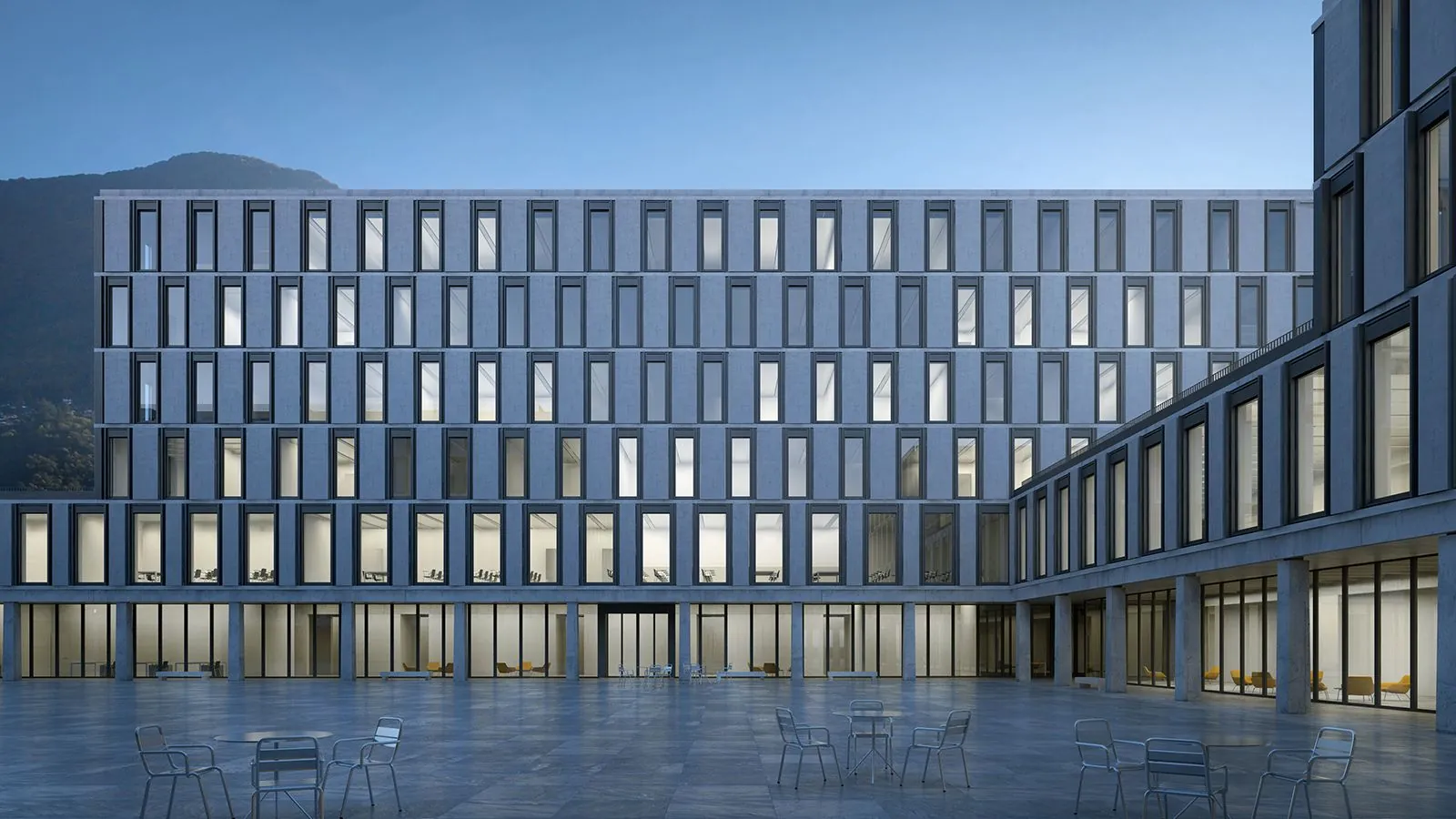
The Faculty of Biomedical Sciences is based at the East Campus in Viganello, at Via la Santa 1: the Zenobia project building, by Ticino architects Simone Tocchetti and Luca Pessina, opened on March 22, 2021 and also houses USI's Faculty of Informatics and the SUPSI Department of Innovative Technologies. That is where Ticino's doctors are trained: Saturday's 52 graduates are the latest step on a path that began with the first 47 doctors of 2023.